How to Avoid Polymarket Fees: Trading Costs Explained
Most new Polymarket traders look at a market price and assume that is what they are paying. A 60¢ share costs 60¢. Simple.
Then they actually trade, and the math stops working. They bought "at 60¢," somehow ended up with an average fill of 62¢, paid a fee at resolution they did not see coming, and walked away from a "winning" trade with less profit than they expected.
The good news: every line item in that gap is understandable, predictable, and at least partly avoidable. This guide breaks down what Polymarket actually charges and the habits that quietly cut your trading costs over the long run.
What You Will Learn
- Every component of Polymarket's true cost (fees, spread, slippage, on-ramp)
- Why limit orders are the single biggest fee-reduction tool you have
- How to size and time trades to minimize your total cost per round trip
- Common "fee mistakes" that look like bad luck but are actually self-inflicted
What Polymarket Actually Charges
Before talking about how to reduce fees, you need a clear picture of what they are.
When you trade on Polymarket, your true cost is the sum of several things, only some of which show up as a "fee" line:
- Trading / resolution fee. Polymarket charges an explicit fee on each contract (a percentage of the payout, applied at resolution). This is the closest thing to a traditional commission.
- Bid-ask spread. The difference between the best buy price and best sell price. You pay this every time you cross the book with a market order.
- Slippage. When your order is larger than the top of the book, it eats through deeper price levels at worse prices.
- On-ramp / off-ramp costs. Converting fiat to pUSD and back is not free. Exchange fees, on-ramp fees, and any spreads on the way in or out are part of your true cost.
A round-trip trade pays most or all of these twice (once in, once out). On a 50¢ market with a wide spread and a market order, the "hidden" costs can easily dwarf the headline trading fee.
This is why beginners often feel like the platform is "rigged." It is not. They are just paying for things they did not realize they were paying for.
The Biggest Cost You Are Probably Ignoring: The Spread
For most retail traders, the bid-ask spread costs more per year than the trading fee does.
Here is why. The trading fee is a small percentage of the payout. The spread is often 1 to 5 cents (sometimes more on thin markets) and you pay it on both sides of every round trip. If you trade in and out of a market with a 3¢ spread on a 60¢ contract, you have effectively paid roughly 5% of your stake just for the privilege of crossing the book twice.
That is not a fee Polymarket charges. That is a fee the market charges you for being impatient.
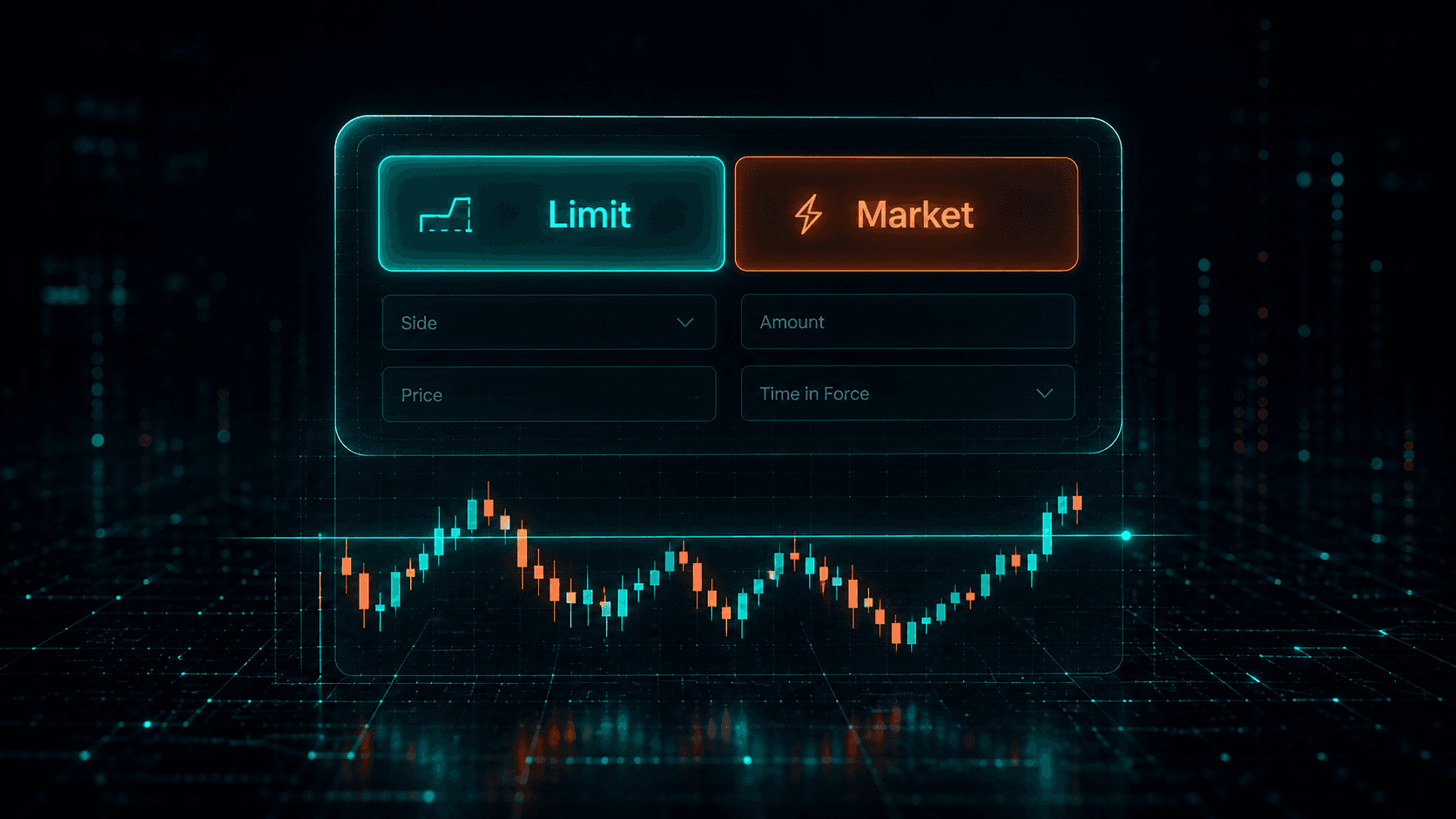
If you have not seen our explainer on how orders work, Polymarket Limit Orders vs. Market Orders Explained Simply covers it in depth.
Limit Orders: The Real Fee Hack
The single most effective cost-reduction strategy for Polymarket is brutally simple:
Default to limit orders. Use market orders only when speed genuinely matters.
A limit order does two things to your cost structure at once:
- It eliminates spread cost on entry. Instead of crossing the book and paying the ask, you can sit at the best bid (or even narrow the spread by bidding inside it). When someone sells into you, you trade at your price, not theirs.
- It eliminates slippage. Your order only fills at the price you specified or better. There is no walking through three price levels and discovering your average fill is 4¢ worse than the top of the book.
The tradeoff is that limit orders may not fill. If the market runs away from your price, you miss the trade. That is fine. The trade you miss is not a trade you lose money on. The trade you chase at a bad price usually is.
For most calm, planned entries, set a limit order at the price you would actually be happy paying, then walk away. Pair this with Price Alerts so you are not babysitting the book, you just get told when something interesting happens.
Smaller Habits That Add Up
Beyond limit orders, a handful of micro-habits compound over a year of trading:
1. Avoid trading thin markets unless you have a real edge.
A market with a 6¢ spread and $2,000 of liquidity is not a market, it is a tax. Filter for liquidity on the Markets Explorer before committing capital.
2. Size to the order book, not to your conviction.
If the top of the book has 800 shares at 60¢ and the next level is at 64¢, buying 2,000 shares with a market order is a slippage disaster. Either split the order, place a limit, or pick a deeper market.
3. Avoid round-tripping out of boredom.
Every entry and exit pays spread plus fee plus, sometimes, slippage. Traders who flip in and out of the same market three times a week often outpay traders who hold a single, well-sized position to resolution.
4. Plan your on-ramp.
Getting pUSD on-chain costs money. Doing it in many small chunks is more expensive than doing it in fewer, larger ones. If you know you are going to be trading consistently, fund the wallet in chunks, not transactions.
5. Test with paper trading.
Before paying real fees to learn a new strategy, run it on Paper Trading for a couple of weeks. You will see exactly where your habits leak money before any of those leaks become real.
A Quick Cost Comparison
Imagine the same trade, executed two ways, on a market trading at 60¢ with a 3¢ spread:
The "click and pray" version (market order, no plan):
- Buy 500 shares with a market order at the best ask: ~62¢ average fill.
- Market moves to 70¢, you sell with a market order at the best bid: ~68¢ average fill.
- Spread paid on entry + exit: ~4¢ per share = $20.
- Plus the resolution fee on any open exposure, plus any on-ramp cost.
The patient version (limit orders, planned levels):
- Limit buy 500 shares at 60¢. It fills over a few minutes.
- Limit sell 500 shares at 70¢. It fills as the market moves up.
- Spread paid: roughly zero. You traded at your prices, not through them.
- Same resolution fee at the end.
Same thesis. Same outcome. Materially different P&L, and the only difference is order type and patience.
This is what "lowering fees on Polymarket" actually looks like in practice.
Conclusion
There is no magic toggle that turns Polymarket fees off. There is, however, a stack of small choices that together can cut your true cost per trade significantly:
- Default to limit orders to stop bleeding money on the spread.
- Trade only in liquid markets so slippage does not eat your edge.
- Size sensibly so big positions do not walk through the book.
- Plan your funding so you are not paying on-ramp fees every other day.
Do all five and the difference at the end of the year is not subtle. It is often the difference between a slow grind down and a slow grind up.
Resources:
Frequently Asked Questions
Does Polymarket charge fees on every trade?
Yes. Polymarket charges an explicit per-contract fee (a percentage of the payout, applied at resolution), and you also pay the bid-ask spread every time you cross the order book. These are separate costs.
What is the fastest way to lower my Polymarket trading costs?
Switch from market orders to limit orders. The bid-ask spread is the biggest hidden cost for most retail traders, and limit orders let you trade at your price instead of paying the spread on every round trip.
Do limit orders avoid Polymarket's trading fee entirely?
No. Limit orders reduce or eliminate the spread and slippage components of your cost, but the explicit per-contract fee still applies at resolution.
Why does my trade cost more than the listed price?
Because the listed price is not your total cost. You also pay the bid-ask spread (the gap between best buy and best sell) every time you cross the book, plus potential slippage if your order is larger than the top of the book.
Is it cheaper to hold a position to resolution or sell early?
Holding to resolution means you only pay the spread on entry (assuming you used a limit order). Exiting early means paying the spread again on exit. If you are confident in your position, holding is usually cheaper. If you want to lock in a profit or cut a loss, exiting early is worth the extra cost.
Disclaimer: The content provided in this article and via the PolyAlertHub tools is for informational purposes only. It does not constitute financial, investment, or trading advice. Polymarket fee structures change over time, always verify current details directly with Polymarket. Prediction markets carry high risk, and you should never wager more than you can afford to lose. Past performance does not guarantee future results.