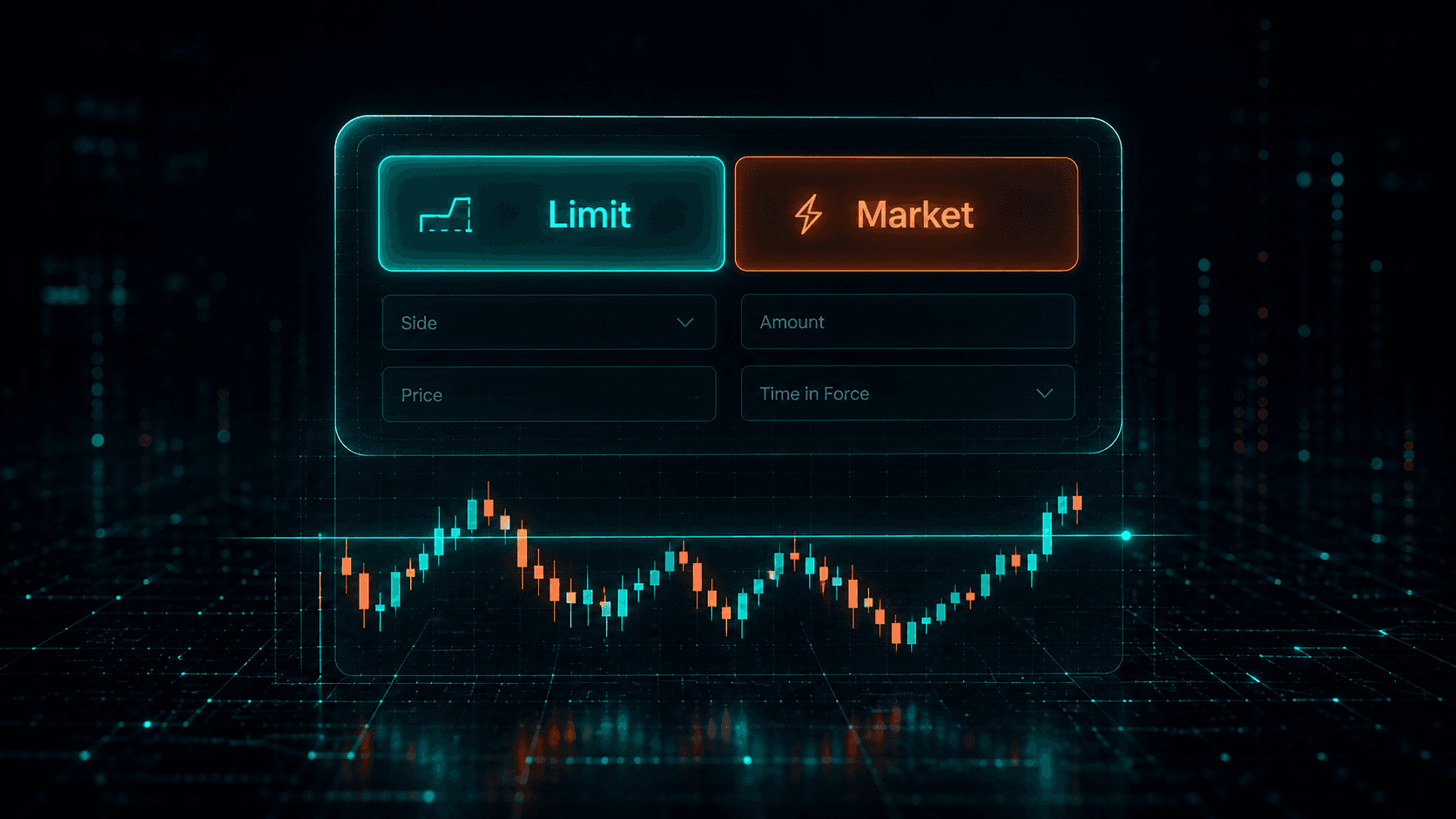
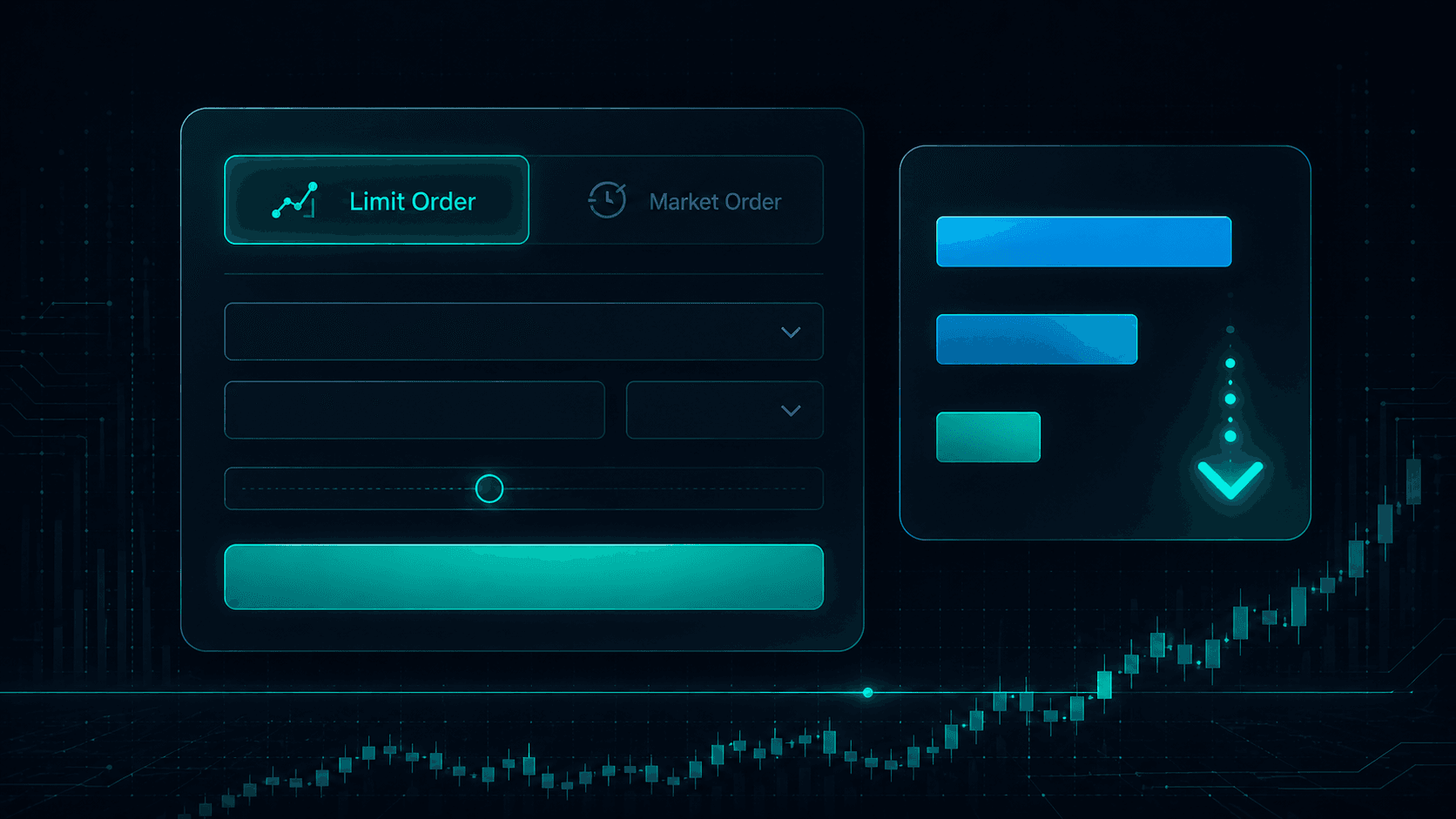
Polymarket Limit Orders vs. Market Orders Explained Simply
If you have ever placed a Polymarket trade and watched the fill price come back worse than the number on the screen, congratulations, you have met the spread.
The good news is that nothing is broken. The bad news is that you almost certainly used the wrong order type for what you were trying to do. Limit vs. market is one of those topics that sounds boring and technical until you realize that picking the wrong one is quietly costing you several percent on every trade.
This guide explains the Polymarket order book in plain English, breaks down exactly what limit and market orders do, and gives you a simple rule for which one to use in any given situation.
What You Will Learn
- How the Polymarket order book actually works
- What a market order is and what it really costs
- What a limit order is and why it is usually the better default
- A simple decision rule for picking between the two
- Common mistakes that turn a good thesis into a bad trade
The Order Book in 30 Seconds
Every Polymarket outcome (Yes and No) has its own order book. The order book is just a list of unfilled orders from other traders:
- Bids are people willing to buy at certain prices, listed highest to lowest.
- Asks are people willing to sell at certain prices, listed lowest to highest.
- The gap between the best bid and the best ask is called the spread.
A simplified example for a "Yes" outcome:
ASKS (sellers)
$0.63  ->  1,200 shares
$0.62  ->    500 shares
$0.61  ->    150 shares   <- best ask
------------------------ spread
$0.59  ->    300 shares   <- best bid
$0.58  ->    900 shares
$0.57  ->  2,000 shares
BIDS (buyers)
The "market price" you see on a card (around $0.60 here) is roughly the midpoint between the best bid and the best ask. Nobody is actually trading at that midpoint. If you want to buy right now, you buy from the asks. If you want to sell right now, you sell into the bids.
This is the entire mental model. Everything else is which order type you use to interact with this book.
Market Orders: Speed Over Price
A market order says: "Fill me now, at whatever price is currently available."
If you place a market buy for 500 Yes shares on the book above:
- 150 shares fill at $0.61
- 350 shares fill at $0.62
- Average price: ~$0.6170
Even though the displayed price was around $0.60, you ended up paying closer to $0.62. That extra cost is the spread (and "slippage" if your order ate through multiple price levels).
When market orders make sense:
- News just broke and you genuinely need to be in the market in the next few seconds.
- The market is extremely liquid with a 1-cent spread, so the cost of immediacy is small.
- You are exiting a position quickly to lock in a result.
When market orders are a mistake:
- The spread is wide (3 cents or more). You are paying a real percentage cost on entry and exit.
- The order book is thin and you would walk through multiple price levels.
- You are entering a non-urgent position you have been thinking about for days. There is no reason to pay the urgency premium.
Mental model: A market order is a tip you pay to the order book in exchange for not having to wait.
Limit Orders: Price Over Speed
A limit order says: "Only fill me at this specific price or better."
If you place a limit buy for 500 Yes shares at $0.60, your order sits on the bid side of the book. It does not execute immediately. It executes when (and if) a seller is willing to come down to $0.60.
Three things can happen:
- Someone sells into you at $0.60. Your order fills, partially or fully.
- Nobody sells at $0.60. Your order sits there until you cancel it or the market moves.
- The price moves away from you. The market goes to $0.65 and your $0.60 order never fills. You miss the trade.
That third possibility is the cost of using a limit order: you might not get filled. In return, you control your entry price exactly.
When limit orders make sense (most of the time):
- You have a price thesis. You know what level you would pay; you do not know if the market will give it to you.
- The spread is wide and you want to narrow it by joining the best bid or best ask.
- You are using Price Alerts to plan your entries calmly and you have time to wait.
- You are entering a position you would not chase if the price ran away.
When limit orders are a mistake:
- You absolutely must be in the position right now (news catalyst, fast-moving event).
- You set the limit at a price the market will never reach, so you essentially placed no order at all.
Mental model: A limit order is a standing offer. You are telling the market, "I will trade if you come to my price. Otherwise, I am happy to do nothing."
A Simple Decision Rule
If you remember nothing else from this post, remember this:
Default to limit orders. Use market orders only when speed genuinely matters more than price.
In practice this means:
- Planned entries from a Price Alert? Limit order at your level (or slightly above the best bid to jump the queue).
- Calm exits hitting your target? Limit order.
- News just broke and the price is moving fast? Market order, but check the order book depth first so you do not get destroyed by slippage.
- Stopping out of a losing position because your invalidation level hit? Market order is fine. The point is to be out, not to optimize the last 2 cents.
Most retail traders get this backwards. They use market orders for slow, planned trades (paying spread for no reason) and then use limit orders during fast news moves (and miss the fill entirely). Flipping that one habit alone is worth real money over a year.
Watch the Spread, Always
Before placing any order, look at the spread.
- 1� or less: Cheap to trade. Market orders are not a disaster here.
- 2�4�: Moderate cost. Strongly prefer limit orders, especially on size.
- 5� or more: Wide spread. Limit orders only. If you cannot get filled at a reasonable level, the market may not be liquid enough to trade. We cover this in 5 Common Mistakes New Polymarket Traders Make.
The spread is the most under-discussed cost in prediction markets. It is invisible to beginners because there is no "fee" line item, but it is very real and it compounds across every round trip you make.
Practical Walkthrough: A Calm Entry
Let us put it together. Say you have done the work, you think "Yes" on a market is fairly priced at 70% and the market is currently around 60�. You set a Price Alert at 58�, your "this is a real buy" level.
A day later, the alert fires. Here is the calm playbook:
- Open the market. Confirm your thesis still holds. Has anything material changed?
- Look at the order book. What is the best bid? Best ask? How thick is the book at 58�?
- Place a limit buy at 58� for the size you decided in advance.
- Wait. If it fills, great. If it does not and the market drifts back to 60�, you missed it, and that is okay. You did not chase.
Compare that to the impulsive version: alert fires, you panic, you market-buy 500 shares at "60�," your actual fill comes back at 62�, and your edge just got cut in half before the trade is even open. Same thesis, half the upside, all because of order type.
Conclusion
Limit vs. market is not a deep topic, but it has a disproportionate effect on your long-term P&L. Most of the "bad luck" beginners blame on volatile markets is actually self-inflicted spread cost.
Two rules cover 90% of decisions:
- Default to limit orders. They give you control over price and protect you from spread surprises.
- Use market orders sparingly. Only when speed genuinely matters more than getting an exact fill.
Combine that with Price Alerts so you are entering on planned levels instead of impulses, and Paper Trading so you can practice both order types risk-free, and you have just removed one of the most expensive categories of beginner mistakes from your trading.
Resources:
Frequently Asked Questions
What is the difference between a limit order and a market order on Polymarket?
A market order fills immediately at whatever prices are currently available in the order book. A limit order only fills at the price you specify (or better), and may not fill at all if the market does not reach your price.
Which order type is best for beginners on Polymarket?
Limit orders, in almost every case. They protect you from spread surprises, force you to think about price before you trade, and pair perfectly with price alerts for planned entries.
Will my Polymarket limit order always fill?
No. A limit order only fills if a counterparty is willing to trade at your specified price or better. If the market moves away from your price, the order can sit unfilled until you cancel it.
What is "slippage" on Polymarket?
Slippage is the difference between the price you expected and the price you actually got. It is most common with market orders on thin order books, where a single order can fill across multiple price levels.
How do I know if a Polymarket market has a wide spread?
Open the market and look at the best bid and best ask. If they are more than 2�3 cents apart, the spread is wide and you should strongly prefer limit orders. If the spread is 5 cents or more, the market may not be liquid enough to trade comfortably.
Disclaimer: The content provided in this article and via the PolyAlertHub tools is for informational purposes only. It does not constitute financial, investment, or trading advice. Prediction markets carry high risk, and you should never wager more than you can afford to lose. Past performance does not guarantee future results.