Can You Make Money on Polymarket?
Yes. You can make money on Polymarket. People do it every day.
But that is not really the question you are asking. The real question is "can I make money on Polymarket, consistently, without getting lucky?" And the honest answer to that is: only if you treat it like a skill, not a lottery ticket.
Prediction markets are one of the few places left where a regular person with a laptop and an opinion can still find a genuine edge. There is no Wall Street middleman skimming your trades. There is no minimum account size. The markets are transparent, the fees are low, and the data is public. That is the good news.
The bad news is that the same openness that gives you an edge also gives everyone else one. You are competing against people who do this for a living, algorithms that scan news feeds in milliseconds, and insiders whose information you will never have. Beating them is not impossible. It is just work.
This guide is the unvarnished version. We will look at where the money on Polymarket actually comes from, what profitable traders do differently, the costs that quietly eat your returns, and the realistic path from "I tried it once" to "I do this well."
What You Will Learn
- Whether Polymarket is profitable and where the edge actually comes from
- The four ways real money is made on prediction markets
- The costs (fees, spread, slippage, opportunity) that eat into your returns
- How profitable traders use data and alerts instead of opinions
- A realistic framework for going from beginner to consistently profitable
Is Polymarket Profitable? The Honest Math
Let's start with the uncomfortable part. Most people who try Polymarket lose money. Not because the platform is rigged, but because most people trade the way most people trade in every market: they buy what already feels certain, sell what already feels scary, and react to news about three minutes after the smart money already moved.
The people who do make money are not smarter than you. They are more disciplined. They have a process, they manage their bankroll, and they use tools that give them an informational edge instead of relying on gut feel.
Here is the structure of where profits come from on Polymarket:
1. Mispriced probabilities. The market says an outcome is 40%. You have a real reason to believe it is 55%. You buy at 40¢. If you are right, the gap between 40¢ and the true 55% is your edge. This is the core of every profitable trade.
2. Informational edge. You know something the market has not priced in yet. Maybe you follow a niche sport closely. Maybe you read a regulatory filing no one else read. The moment that information becomes obvious, the price moves and your edge disappears.
3. Behavioral edge. Other traders panic. You do not. A market drops 15¢ on noise, and you buy the dip because you understand the thesis still holds. Profitable traders harvest the mistakes of impatient traders.
4. Structural edge. Arbitrage, market making, and category specialization. These are less about prediction and more about exploiting how the platform itself works.
The traders who compound over time usually combine two or three of these. The traders who blow up their accounts rely on exactly one: a strong opinion.
How People Actually Lose Money on Polymarket
If you want to make money, study how people lose it first. The patterns are remarkably consistent.
Chasing certainty. Buying 92¢ shares that pay $1.00 on resolution looks like easy money. It is, until the 8% tail risk hits and you lose your entire stake on a single upset. One loss wipes out twelve wins.
Reacting to news too late. By the time you see a headline, the market has already moved. Buying after the news is priced in is how you become the exit liquidity for the people who were positioned before the news broke.
No bankroll management. Putting 30% of your account on a single trade is not conviction. It is a coin flip with extra steps. Profitable traders size positions so that no single loss matters.
Ignoring the smart money. The best traders on the platform leave fingerprints. Their positions are public. Ignoring that data to trade your own hunch is like refusing to look at the scoreboard because you trust your feel for the game.
Trading too many markets. Edge is concentrated, not spread out. The trader who watches five markets they deeply understand beats the trader who has a hot take on fifty.
We break down these failure modes in detail in 5 Common Mistakes New Polymarket Traders Make.
The Costs That Eat Your Returns
Polymarket is not free, even when the headline fee is zero. Understanding the real cost structure is the difference between a trader who thinks they are profitable and one who actually is.
Trading fees. Polymarket charges fees on certain trades, and the rules change over time. Read the current mechanics in How to Avoid Polymarket Fees & Trading Costs and How to Trade on Polymarket Without Fees.
The spread. The gap between the buy price and the sell price is a hidden fee you pay every time you enter and exit. On thin markets it can be 3 to 5 cents. That is real money leaving your account on every round trip.
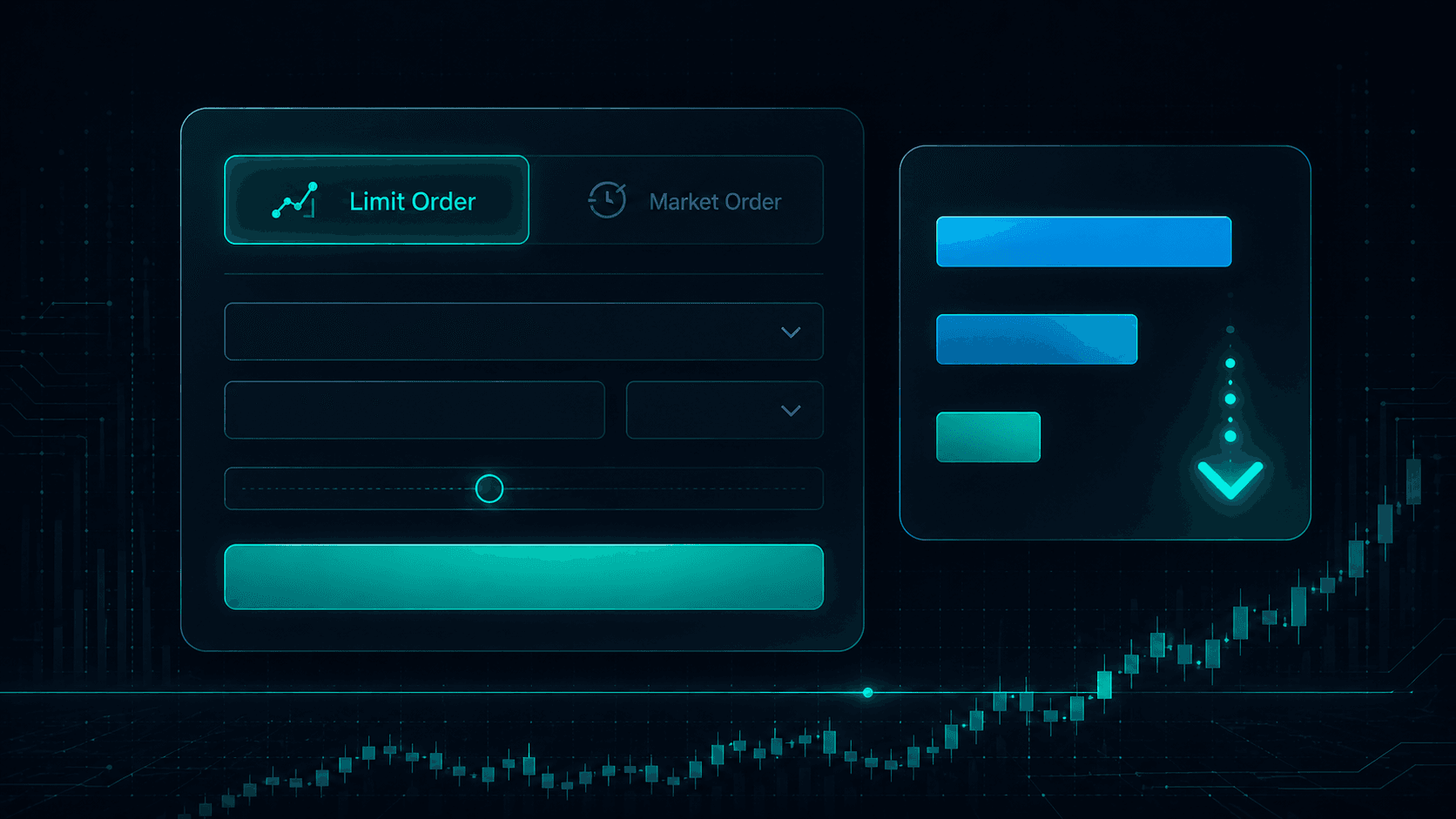
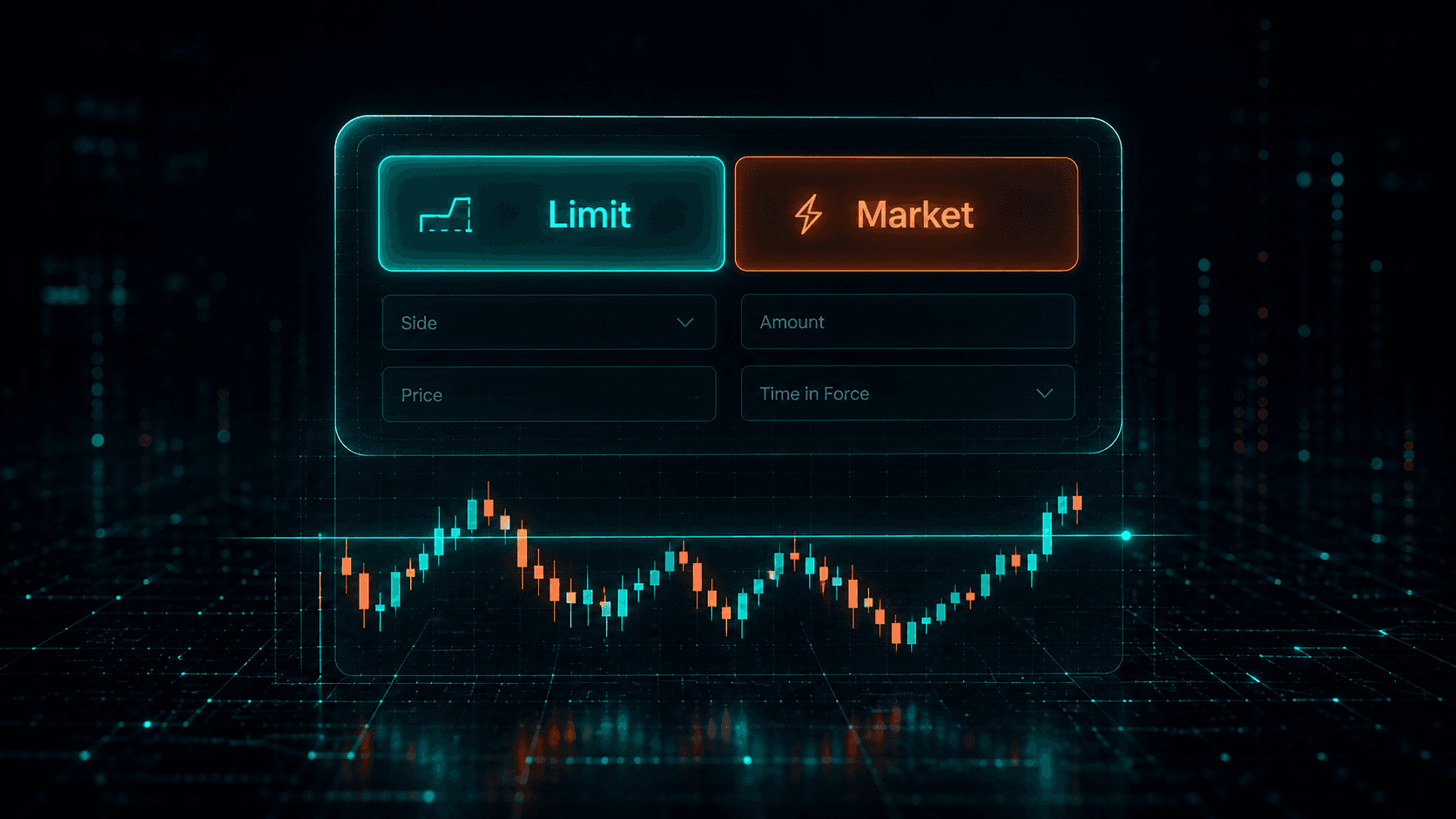
Slippage. When you market-order into a position large enough to move the price, you pay more than the number on the screen. This is why limit orders matter. See Polymarket Limit Orders vs. Market Orders Explained.
Opportunity cost. Capital locked in a position that goes nowhere is capital that cannot be deployed into a better opportunity. Time is a cost.
Variance tax. Even with positive expected value, a string of bad luck can force you out of good positions early. Under-sizing relative to your bankroll is how you survive variance.
A trader who buys at 45¢ and sells at 50¢ has not made 5 cents. They have made 5 cents minus the spread, minus fees, minus slippage, minus the opportunity cost of the capital. Honest accounting is the first habit of a profitable trader.
How Profitable Traders Actually Win
The small group of traders who consistently extract money from Polymarket share a few habits. None of them are glamorous. All of them are learnable.
Before they look at the chart, before they check what whales are doing, they write down what they think the probability is and why. This prevents them from outsourcing their judgment to the crowd. The market price is one opinion. Yours should be another. When the two disagree meaningfully, you have a potential trade.
For the mental model behind pricing, read Understanding Polymarket Odds: How a 60¢ Share Actually Works.
They follow the smart money, not the loud money
The most profitable wallets on Polymarket are public. Their positions are visible on-chain. Tools like the Smart Money Tracker and the Trader Leaderboards let you see who actually has a track record, not just who has a big account.
The mistake is assuming big money equals smart money. It does not. A wallet with $2 million in volume might be a market maker with no directional view, or a deep-pocketed trader who is down lifetime. Profitable traders filter for skill, not size. We cover this distinction in How to Spot Smart Money on Polymarket.
They use alerts instead of attention
The edge in prediction markets rewards patience, not presence. Profitable traders do not stare at charts. They decide their levels in advance, set Polymarket alerts, and walk away. When the market comes to them, they act. When it does not, they do nothing. This is the entire philosophy behind The Lazy Trader's Guide to Polymarket.
They specialize
Profitable traders do not have opinions on everything. They pick categories where they already have a free information edge, the markets they would be following anyway because of their job, their hobbies, or their interests, and they trade those. A sports bettor who watches every NBA game has a real edge in NBA markets. The same person trading political markets they read about for five minutes has none.
Use the Polymarket Categories guide to find your lane.
They manage risk like it is the only thing that matters
Because it is. A trader with a 55% win rate and poor bankroll management will go broke. A trader with a 45% win rate and excellent bankroll management will compound. Position sizing, stop levels, and avoiding the temptation to "make it back" on one trade are what separate the people who last from the people who blow up.
Test all of this without real money first using paper trading.
A Realistic Framework: From Beginner to Profitable
Here is the path that actually works. It is not fast. It is the path every consistently profitable trader eventually arrives at.
Phase 1: Observe (Weeks 1 to 2)
- Open an account. Do not deposit yet.
- Pick 3 to 5 categories you genuinely follow in real life.
- Track markets in those categories. Write down what you think the price should be before you look at the actual price.
- Compare your estimates to the market. Notice where you are consistently off.
Phase 2: Paper trade (Weeks 3 to 4)
- Use paper trading to place trades with simulated capital.
- Treat it like real money. Track every entry, exit, and reasoning.
- After 30 paper trades, look at your win rate and your honest PnL. This is your baseline.
Phase 3: Trade small, with a process (Months 2 to 3)
- Deposit a small amount you can afford to lose entirely.
- Set price alerts on your levels instead of watching charts.
- Risk no more than 1 to 2% of your bankroll per trade.
- Journal every trade. The thesis, the entry, the outcome, the lesson.
Phase 4: Add data layers (Months 3 to 6)
- Layer in Whale Alerts and the Smart Money Tracker so you see what profitable wallets are doing, not just what prices are doing.
- Start filtering the Trader Leaderboards for specialists in your categories. Build a watchlist of 5 to 10 wallets worth following.
Phase 5: Scale what works, cut what does not (Month 6+)
- Identify the 2 or 3 approaches that are actually profitable from your journal.
- Stop doing everything else. Most of your strategies will not work. That is normal and expected.
- Scale position sizes slowly, only after a meaningful sample of trades confirms the edge.
Most people quit at Phase 2 because paper trading "does not feel real." That is exactly why they lose money in Phase 3. The point of paper trading is not to feel something. It is to find out whether you have an edge before you pay to learn the hard way.
How Much Can You Realistically Make?
There is no honest number we can give you, because it depends entirely on your bankroll, your edge, your discipline, and the time you put in. But here are the guardrails.
Expect variance, not a salary. Even excellent traders have losing months. If you need the money to pay rent, you should not be trading prediction markets. The pressure of needing a win is how traders make their worst decisions.
Edge compounds slowly. A trader with a 5% edge per trade, making 20 trades a month, is doing very well. That is not "get rich" math. It is "build a real skill over a year" math.
The biggest wins come from specialization and patience. The traders who make the most are not the most active. They are the ones who wait for the fat pitch in a market they understand deeply, and they size it appropriately.
If you are looking for a comparison of where Polymarket sits relative to other options, see Kalshi vs. Polymarket: Which Prediction Market Is Better in 2026? and Polymarket vs. Traditional Sportsbooks: Where Are the Better Odds?.
So, Can You Make Money on Polymarket?
Yes, if you are willing to do what most people are not: form an independent view, manage risk ruthlessly, use data instead of feelings, and specialize instead of spraying bets across every market on the homepage.
No, if you are looking for a quick score, trading your gut, refusing to track your results, or treating the platform like a sportsbook with extra steps.
The edge exists. It is real. The data is public, the tools are available, and the competition is beatable for anyone willing to treat it as a craft. The question is not whether money can be made on Polymarket. It is whether you are willing to become the kind of trader who makes it.
Resources:
Frequently Asked Questions
Can you actually make money on Polymarket?
Yes. Traders make money on Polymarket every day by finding mispriced probabilities, exploiting informational edges in categories they understand, and following proven profitable wallets via tools like the Smart Money Tracker. The catch is that consistent profitability requires discipline, bankroll management, and a real process, not just strong opinions.
Is Polymarket gambling or trading?
It depends entirely on how you approach it. Buying shares based on a gut feeling with no edge is gambling. Buying shares when you have a demonstrable reason to believe the true probability differs from the market price is trading. The same platform supports both behaviors. Which one you do is up to you.
How much money do you need to start trading on Polymarket?
You can start with a very small amount, but you should only deposit capital you can afford to lose entirely while you learn. Most successful traders recommend paper trading first, then starting small enough that no single loss matters to your bankroll. Risking 1 to 2% of your bankroll per trade is a sensible upper bound.
What is the easiest way to find an edge on Polymarket?
Specialize in a category you already follow for non-trading reasons. If you would be absorbing the news anyway, your information cost is zero and your edge comes from interpreting that news better than the average market participant. Combine that with alerts so you act on your edge instead of watching charts all day.
Do fees eat all your profits on Polymarket?
Not if you trade intelligently. Fees, spreads, and slippage are real costs, but they are manageable with limit orders, sensible position sizing, and avoiding overtrading. Read How to Avoid Polymarket Fees & Trading Costs for the current mechanics.
Can I copy profitable traders and make money?
Copy trading can work as a signal source, but blindly mirroring any wallet is risky. Profitable wallets have entry prices, conviction levels, and bankroll contexts that you do not share. The right approach is to use tools like the Trader Leaderboards and Trader Alerts to source ideas, then apply your own judgment before sizing a trade. See How to Copy Trade Polymarket Whales.
Disclaimer: The content provided in this article and via the PolyAlertHub tools is for informational purposes only. It does not constitute financial, investment, or trading advice. Prediction markets carry high risk, and you should never wager more than you can afford to lose. Past performance does not guarantee future results.