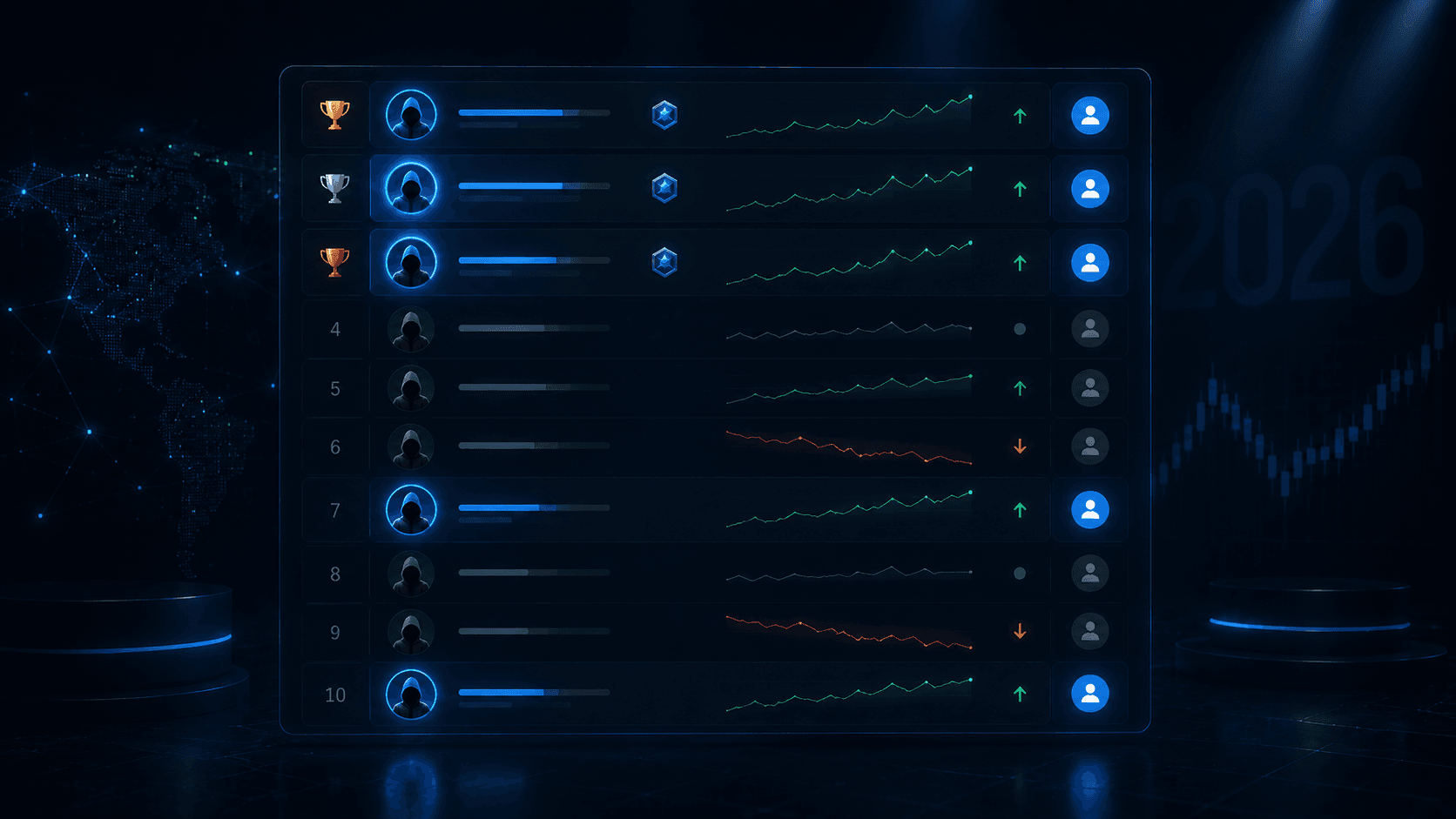
How to Find Winning Wallets on Polymarket
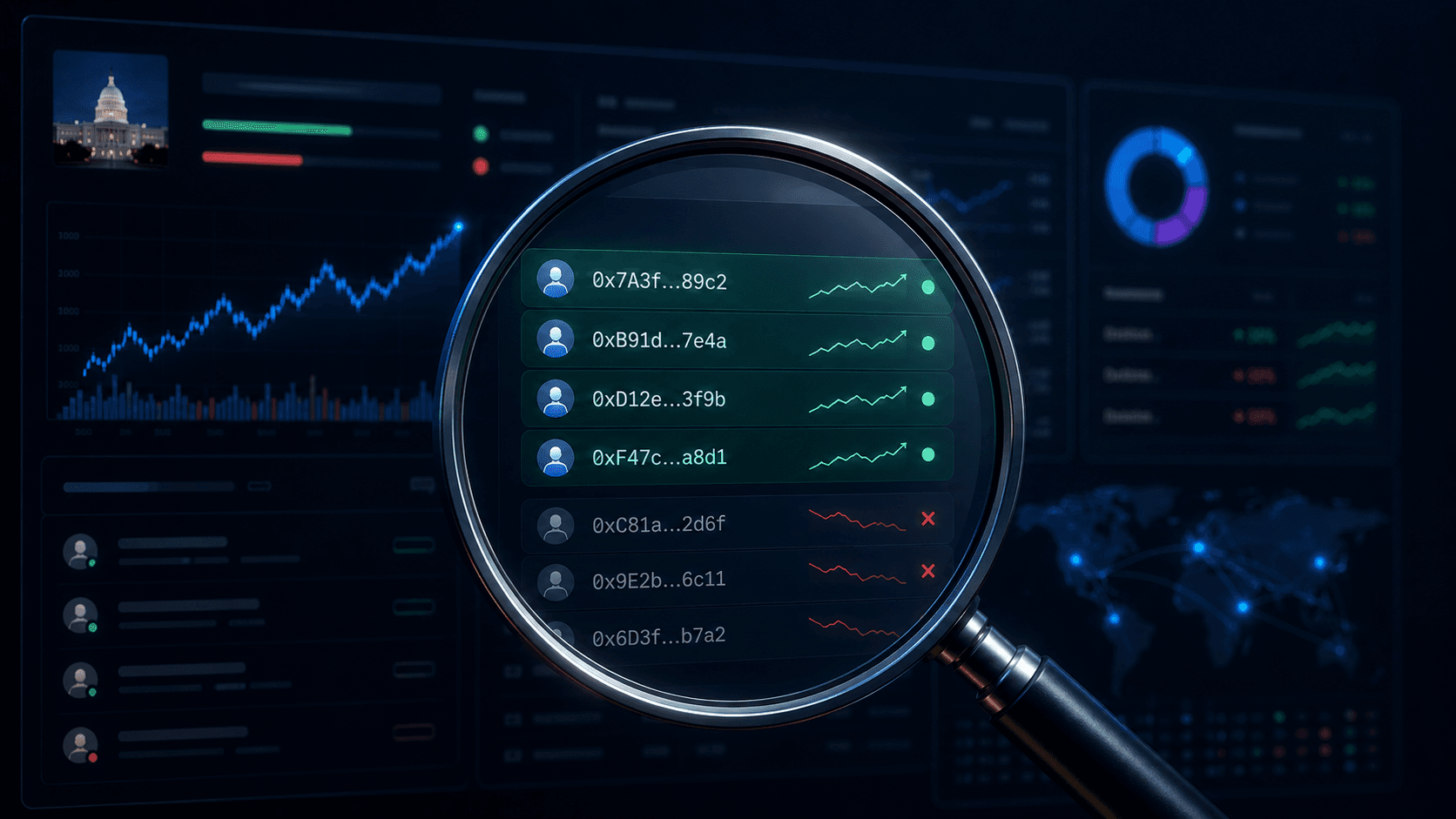
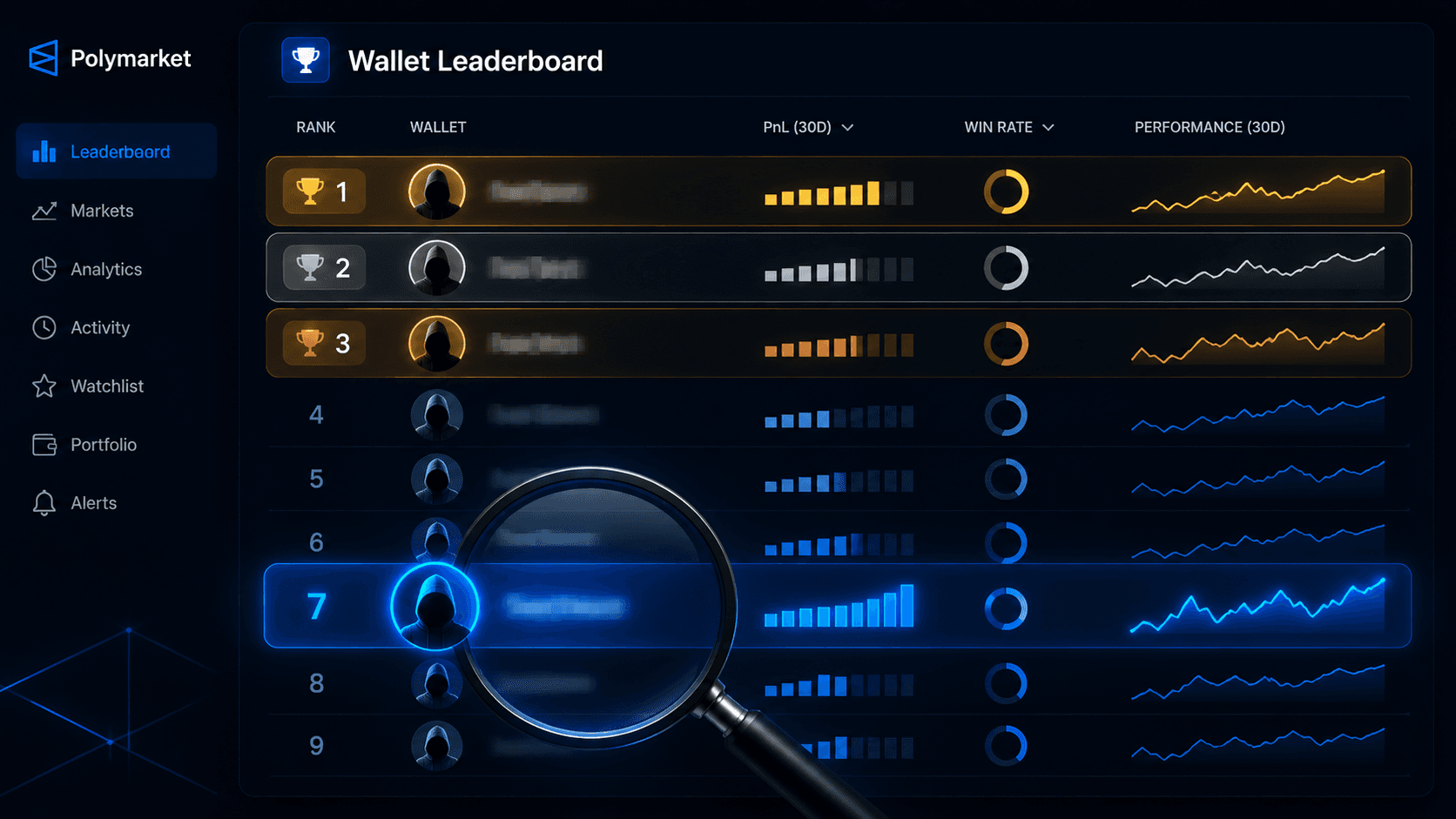
Most traders looking for "smart money" on Polymarket make the same mistake: they sort the leaderboard by total PnL, pick the top wallet, and start watching it like it is the oracle.
That is not finding winning wallets. That is finding the one person who got extremely lucky on a single $200,000 election ticket six months ago. Those wallets exist on every leaderboard, and following them will quietly poison your trading.
A winning wallet is something different. It is a trader with a long enough track record, a clean enough P&L curve, and a recognizable style that you can build a thesis around. They are not always the biggest names. They are rarely the loudest. But once you know how to spot them, you stop guessing and start watching the people who actually move money on this platform for a living.
This guide is the filter we wish someone had given us when we started.
What You Will Learn
- Why "top of the leaderboard" is usually not where the real edge lives
- The four filters that separate skill from luck on a Polymarket profile
- How to read a wallet's PnL curve like an analyst
- How to turn a list of names into a working watchlist with Whale Alerts
- The traps that make people follow the wrong wallets for months
Why You Cannot Just Sort by Total PnL
Total realized PnL is the most obvious metric on any leaderboard. It is also the most misleading on its own.
A wallet up $400,000 lifetime sounds like a winner. But that number can be produced in two completely different ways:
- One enormous trade. Someone bought "No" on a clearly mispriced market a year ago, won, and never repeated the performance. They are now sitting on a phantom score that does not reflect any real ongoing edge.
- Hundreds of resolved trades stacking up. Someone has been quietly grinding political, sports, and crypto markets for over a year, with a smooth upward curve and no single trade carrying the rest.
The second wallet is worth tracking. The first is a museum piece.
If you treat PnL as a binary "they are up, follow them" signal, you will end up filling your watchlist with category one. That is why we always recommend layering filters on top of the raw number.
The Four Filters We Apply on Every Wallet
Before a wallet earns a spot on a watchlist, it has to clear four checks. None of them are exotic. Most of them just take honesty.
1. Resolved Trades > 50
Win rate is meaningless on small samples. A wallet 8-2 on resolved trades has a 80% win rate and roughly zero predictive power. Even 30 trades is shaky.
We use 50 resolved trades as a soft floor. Below that, the leaderboard is mostly noise. Above 100, you start getting usable signal. Above 500, you are looking at someone who has clearly committed to this as a discipline.
You can scan this directly on the Traders Leaderboard, or open any wallet at polyalerthub.com/traders/<wallet> and look at their resolved positions count.
2. Win Rate Calibrated to Their Style
A 90% win rate sounds incredible until you realize the wallet only buys 95-cent favorites. They are essentially picking up dimes in front of a steamroller, and one bad resolution wipes out months of "wins."
What you want is a win rate that fits the trader's style:
- Favorite scalpers (mostly trading 80 to 99 cent contracts) should have very high win rates and small per-trade PnL. If their win rate is below 80%, the math does not work.
- Mid-curve traders (mostly 30 to 70 cent contracts) typically need win rates north of 55% to be net profitable.
- Long-shot hunters (frequent sub-30-cent buys) can be profitable at 30 to 40% win rate if their winners pay out big.
If a wallet's win rate does not fit the prices they are trading, something is off. Either the data is incomplete, or you are looking at a streak that will mean revert.
3. A Smooth P&L Curve
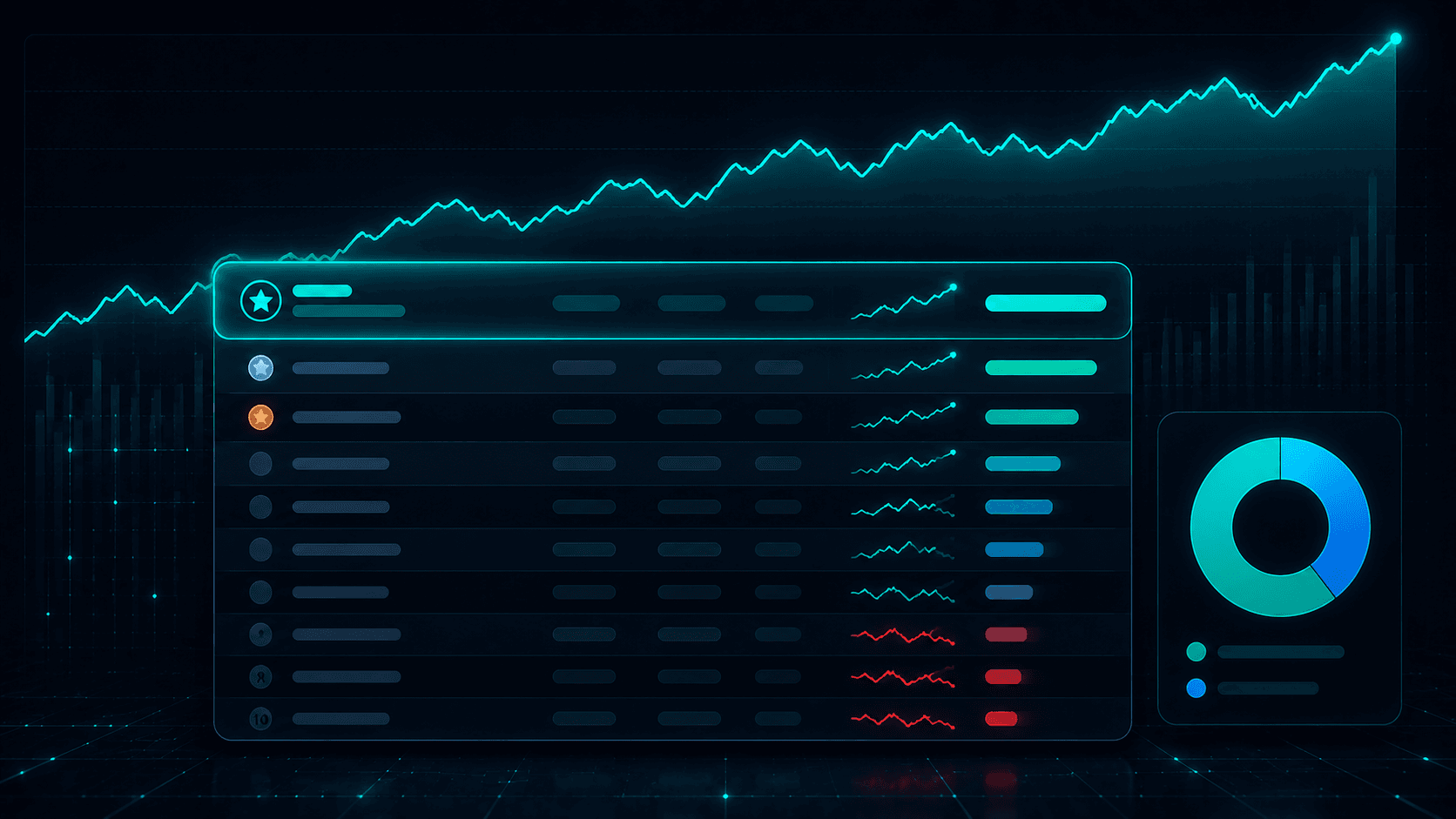
Open the profile. Look at the PnL chart over time. Then ask one question: would this curve look the same with the single best trade removed?
If yes, you have a real trader. If no, you have a one-hit wonder.
A clean grinder's curve looks like a slightly noisy ramp. A lottery winner's curve looks flat for months and then has one giant cliff upward. Both can show "+$300k lifetime" at the top of the page. Only one of them deserves a slot on your watchlist.
For more on reading profiles like an analyst, the Polymarket Analytics: Free Tools to Track Winning Traders guide walks through this in more detail.
4. Activity in Categories You Understand
The smartest wallet on Polymarket is useless to you if they only trade obscure crypto airdrop markets and you trade politics. Their flow will not help you make decisions, and you will not have any context to evaluate when they are right or wrong.
Pick wallets whose lanes overlap with yours. A politics specialist if you trade politics. A sports specialist if you trade sports. A crypto specialist if that is your edge area. Then you can actually use the signal.
Reading a Profile Like an Analyst
Filtering gets you to a list. Reading a profile gets you to conviction.
When you click into any wallet on PolyAlertHub, you are not just collecting numbers. You are building a small mental model of the person behind the address. Here is the checklist we run through:
1. What is their lane?
Is the PnL concentrated in one category? Most consistent winners specialize. The "all category top trader" is rare and usually a red flag (often a market maker, hedger, or wash trader).
2. How do they enter?
Look at fill prices. Are they buying near the bottoms of price ranges, or chasing into strength? Patient accumulation is a different signal than late momentum buying.
3. How long do they hold?
Some wallets scalp. Some hold to resolution. Some swing trade. None is right or wrong. But you need to know which one you are watching, otherwise you will misinterpret their alerts.
4. Do they take profits, or ride to resolution?
Compare realized PnL to current open exposure. A wallet that closes winners into strength will give you exit signals. One that holds to resolution will not.
5. Are they early or late in markets?
If their entries consistently come within hours of a market opening or a relevant news event, they are likely informed. If they pile in after a 20% move, they are momentum followers, not original thinkers.
By the time you have run through this, you should be able to write a one-sentence description of the trader: "Mid-size political specialist who fades consensus a few weeks before resolution and rides to settlement." If you cannot write that sentence, you do not understand the wallet well enough to follow it yet.
Building the Watchlist
Once you have 5 to 10 wallets that pass all four filters and survive the profile read, you have a watchlist.
The mistake most people make is trying to track 50 wallets. You cannot. You will not look at the alerts. You will miss the moves. The whole system collapses.
A short, sharp watchlist works better:
- Add each wallet to Whale Alerts. Set thresholds that match how they trade. A wallet that swings $500k average needs a much higher threshold than one that grinds $5k positions.
- Cross-reference with the Whales Live Feed. When two or three of your tracked wallets hit the same market in the same window, that is the signal you are paying for.
- Refresh the list quarterly. Wallets go quiet. New winners appear. The leaderboard is a moving picture, not a static one.
This setup turns the Polymarket Leaderboard from a curiosity into an actual research engine.
The Traps to Watch For
A few patterns will quietly degrade your watchlist if you are not paying attention.
The "famous wallet" trap.
A wallet making rounds on crypto Twitter is not automatically a winning wallet. Check the actual data. Some of the most-tweeted-about Polymarket traders have mediocre PnL once you remove a single legendary trade.
The "fresh whale" trap.
A wallet funded last week with $500k that immediately wins one big market is not a winning wallet. It is a fresh wallet on a hot streak. Wait for sample size. Our Fresh Wallet Tracker is built to flag exactly this kind of activity for what it is.
The "size confusion" trap.
A wallet trading $1M positions is not necessarily smarter than one trading $10k positions. Bankroll is not skill. Use the Smart Money methodology covered in How to Spot Smart Money on Polymarket to filter for performance, not size.
The "copy trap."
Even a great wallet has bad weeks. If you blindly mirror trades, you will inherit their drawdowns without their conviction. Use winning wallets as a research input, not a copy button. 5 Common Mistakes New Polymarket Traders Make covers this directly.
Conclusion
Finding winning wallets on Polymarket is less about discovering a secret list and more about applying a few honest filters in order:
- Sample size first.
- Win rate calibrated to style.
- A clean PnL curve, not a single jackpot.
- Activity in categories you actually trade.
- A profile read that produces a one-sentence thesis.
Run that filter on the Traders Leaderboard, end up with 5 to 10 names, set alerts, and revisit the list quarterly. That is the entire workflow. It is not glamorous. It just consistently puts you on the right side of who you are watching.
Resources:
Frequently Asked Questions
How many resolved trades should a wallet have before I trust the stats?
At minimum 50 resolved trades. Below that, win rate and PnL are dominated by variance. 100+ is comfortable. 500+ is genuinely informative. Anything less, and you are mostly looking at a small sample with a story attached.
Is the wallet at the top of the Polymarket leaderboard always the best to follow?
No. Top-of-leaderboard wallets are often there because of one extreme outcome rather than consistent skill. Use the Traders Leaderboard as a starting point, then filter for sample size, PnL curve smoothness, and category fit before you add anyone to a watchlist.
How often should I refresh my watchlist?
Roughly once a quarter, or after major event cycles (elections, big sports seasons, large crypto catalysts). Wallets go inactive, new winners emerge, and styles drift. A stale watchlist is almost as bad as no watchlist.
Can I just copy trades from a winning wallet?
You can, but it is the worst use of the data. You inherit their losses without their conviction or context. Use winning wallets as a research input: a trade idea you then evaluate yourself. For more on this trap, see 5 Common Mistakes New Polymarket Traders Make.