Kalshi vs. Polymarket: Which Prediction Market is Better in 2026?
If you traded prediction markets two years ago, this was barely a question. Polymarket was the dominant venue, Kalshi was the regulated upstart, and most serious traders just used both.
In 2026 the calculus has shifted. Kalshi has become a real liquidity destination in U.S. markets after its legal wins, Polymarket has expanded its product surface significantly, and the two platforms have started to diverge in ways that actually matter for how you trade.
This comparison is for traders, not journalists. We are going to skip the marketing pages and the "future of finance" prose and answer the only question that matters: for your specific style and goals, which platform should you be putting capital on in 2026?
What You Will Learn
- The core structural differences between Kalshi and Polymarket
- How market selection, liquidity, and fees actually compare
- Which platform fits which type of trader
- The regulatory and tax implications you cannot ignore
- A clear decision framework so you can stop overthinking it
The 60-Second Summary
If you do not want to read 2,000 words:
- Polymarket is the larger, more globally accessible, on-chain prediction market with deep coverage of crypto, politics, sports, and pop culture. Best for traders who want maximum market selection and are comfortable with crypto rails.
- Kalshi is the U.S.-regulated, CFTC-overseen prediction market with a narrower but legally sanctioned product set. Best for U.S. traders who want regulated rails, fiat deposits, and clean tax reporting.
Most serious U.S. traders end up on both, using each for what it is best at. Outside the U.S., Polymarket is usually the default and Kalshi is largely inaccessible.
Now the long version.
1. Structure & Regulation
This is the single biggest difference and it cascades into everything else.
Polymarket
- Operates on-chain (Polygon).
- Funded with pUSD (Polymarket's native stablecoin), not fiat directly.
- Globally accessible from supported jurisdictions, with some restrictions for U.S. users (the situation has evolved repeatedly, always check the current status before using).
- Resolutions are handled by oracles.
Kalshi
- Operates as a CFTC-regulated designated contract market (DCM) in the United States.
- Funded with fiat from a bank account.
- Open to U.S. users; international access is generally restricted.
- Resolutions are handled under a regulated event-contract framework.
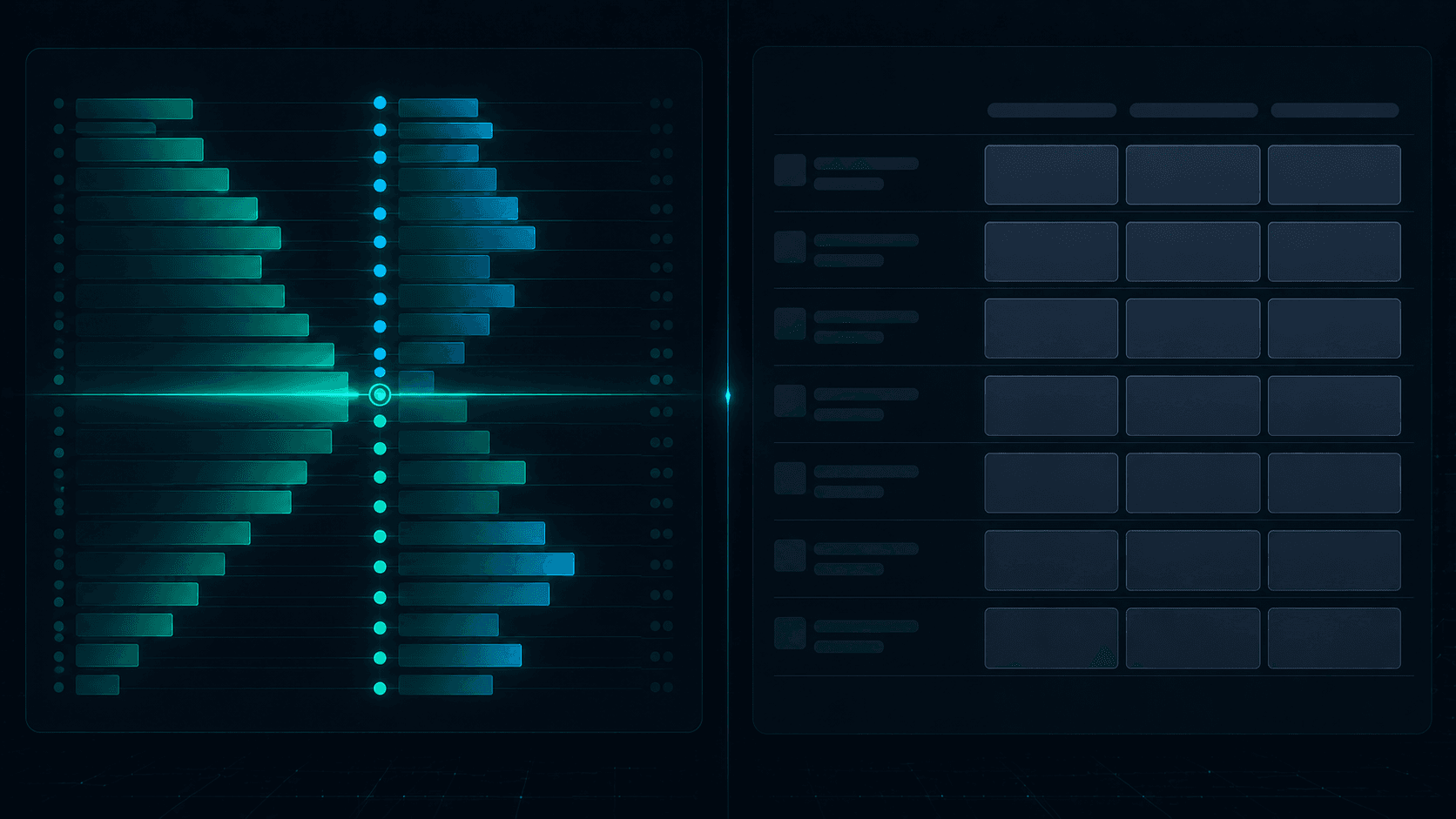
What this means for you: Polymarket gives you global reach and crypto-native flexibility. Kalshi gives you U.S. regulatory clarity and fiat rails. Neither is universally "better", they are answers to different questions.
2. Market Selection
This is where the platforms still feel the most different in 2026.
Polymarket lists thousands of markets across:
- Politics (U.S. and international)
- Crypto (price targets, ETFs, protocol events)
- Sports (championships, fixtures, MVPs)
- Pop culture (awards, music, celebrity events)
- Macro/economics (Fed decisions, CPI, jobs)
- Long-tail oddities (AI benchmarks, SpaceX launches, climate, science)
The catalogue is genuinely huge, and Polymarket continues to spin up new markets quickly for breaking events.
Kalshi is more curated:
- Strong coverage of U.S. economic data and macro events
- Solid politics, with regulatory wins enabling broader election markets
- Growing sports presence after recent expansions
- More limited pop culture and crypto coverage compared to Polymarket
- Stricter market design (contracts are standardized as regulated event contracts)
What this means for you: if your edge is in niche markets, long-tail pop culture, exotic crypto questions, off-the-beaten-path sports, Polymarket has more surface area. If your edge is in U.S. macro data and mainstream politics, Kalshi is increasingly competitive.
3. Liquidity
Liquidity is the silent killer for new traders on both platforms.
Polymarket has deeper top-of-book liquidity on its flagship markets (major elections, top sports finals, blue-chip crypto questions). Long-tail markets can be very thin, so you must check the order book before trading.
Kalshi has been catching up rapidly. Liquidity on flagship U.S. macro and political contracts is genuinely solid in 2026, especially around scheduled data releases. Smaller markets can still be quiet.
What this means for you: for headline events, both platforms work. For niche or breaking events, Polymarket usually has the order book. Always look at the spread and recent volume before entering on either platform, we cover this in 5 Common Mistakes New Polymarket Traders Make.
4. Fees & Payouts
Both platforms ultimately pay out $1.00 per winning share, the same as any binary prediction market. The differences are in how you get in and out.
Polymarket
- Charges an explicit per-trade fee on each contract (a percentage of the payout, deducted at resolution).
- You also pay the bid-ask spread on entry and exit.
- On-chain gas costs are absorbed in the protocol design.
- Deposits/withdrawals are pUSD-based, so your costs include any on/off-ramp fees.
Kalshi
- Fees are explicit and posted on each contract, calculated based on contract price.
- Fiat deposits/withdrawals via bank (typically free or very low cost).
- No spread surprises on the most liquid contracts.
What this means for you: Both platforms charge fees; on Polymarket they come as a combination of an explicit resolution fee and the bid-ask spread, while on Kalshi the fee is posted upfront per contract. Neither is automatically cheaper. Run the numbers on your specific market and size before assuming one platform costs less.
5. Funding, Withdrawals & UX
Polymarket
- Deposit/withdraw pUSD on-chain.
- Self-custody friendly, but requires basic crypto fluency.
- Fast on-chain settlement, but you handle the wallet.
Kalshi
- ACH/wire deposits and withdrawals to a U.S. bank account.
- No crypto required.
- Settlement is regulated and standardized.
What this means for you: if you already use crypto, Polymarket is frictionless. If you do not, Kalshi has a much shallower learning curve.
Both platforms expose data, but the ecosystem around them is very different.
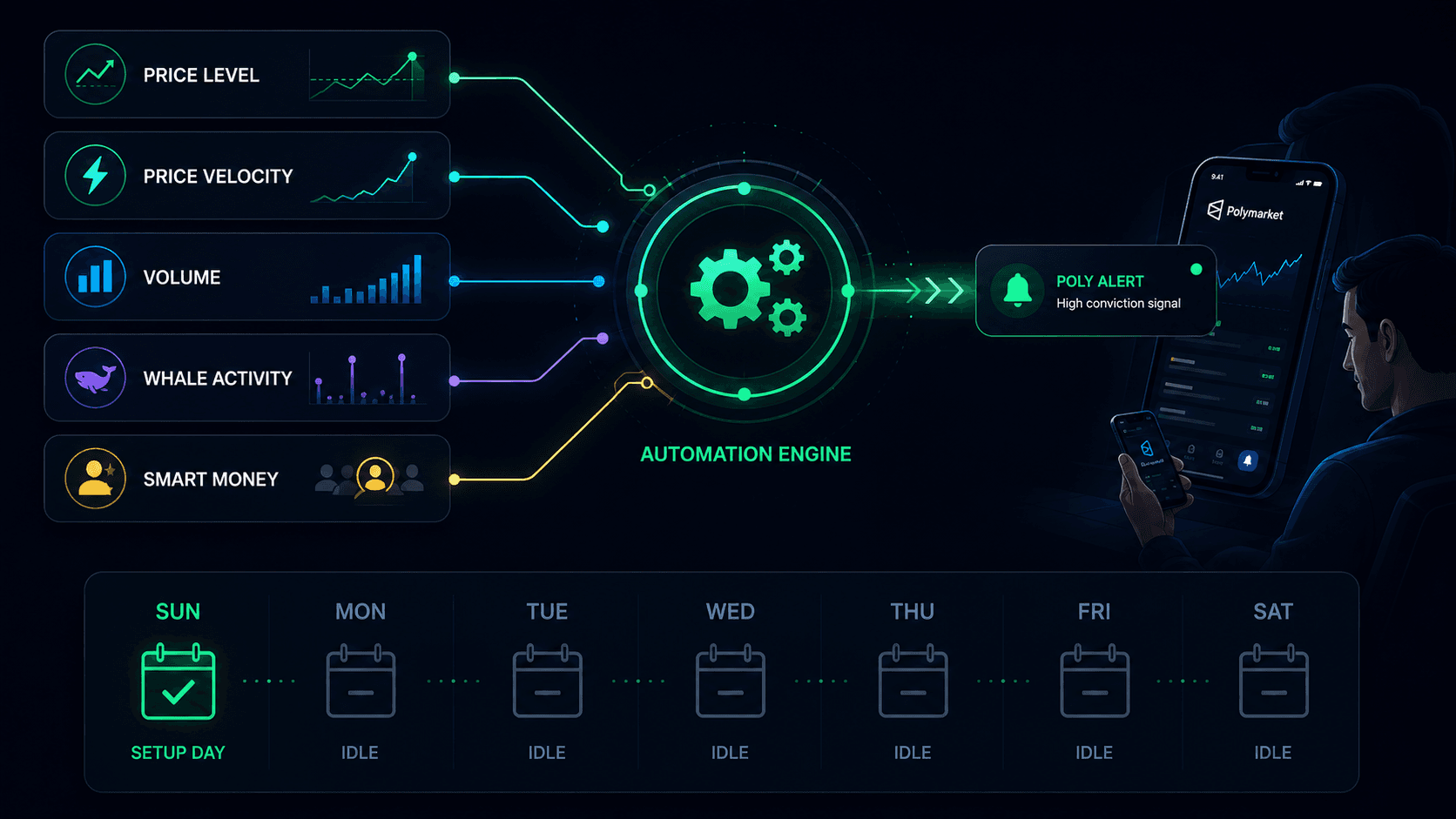
Polymarket benefits from being on-chain. Every trade is publicly verifiable, which means tools like PolyAlertHub can surface things that simply do not exist on closed platforms:
Kalshi offers solid first-party analytics and API access, but because it is not on-chain there is no public, wallet-level visibility into who is doing what. You can see prices and volumes, not the people behind them.
What this means for you: if signal-mining off other traders' behavior is part of your edge, Polymarket's transparency is uniquely valuable. If you mostly trade your own thesis without needing to see whale flow, Kalshi is fine.
7. Taxes & Compliance (U.S. Traders)
This is not legal advice, talk to a professional, but a few realities:
- Kalshi issues standardized tax documentation appropriate for a regulated U.S. venue, which makes filing simpler.
- Polymarket activity, like most crypto trading, requires you to track your own basis and realized gains/losses across pUSD-denominated trades.
For high-volume traders, that operational difference is non-trivial. For casual traders trading a few hundred dollars a month, both are manageable but Kalshi is typically simpler at tax time.
So Which One Should You Use?
A simple decision flow:
You should lead with Polymarket if:
- You live outside the United States in a supported jurisdiction.
- You want maximum market selection (crypto, pop culture, long-tail).
- You already hold crypto and are comfortable with on-chain rails.
- You want to use whale-tracking and on-chain analytics as part of your edge.
You should lead with Kalshi if:
- You are a U.S. trader who prefers regulated venues.
- You trade mostly U.S. macro data and mainstream political events.
- You want fiat deposits/withdrawals and standardized tax forms.
- You do not want anything to do with crypto wallets.
You should use both if:
- You are a serious U.S. trader who wants exposure to Polymarket's catalogue and Kalshi's regulatory clarity. This is the most common setup for active traders in 2026.
Conclusion
The Kalshi vs. Polymarket question used to be about which one would "win." In 2026 the more useful framing is which one fits your stack.
Polymarket is the bigger, more global, more transparent, more flexible playground. Kalshi is the cleaner, more regulated, more taxes-friendly U.S. venue with a rapidly improving product. The smart move for many traders is not to pick a side, but to know which side handles which job better.
Whichever you choose, the rest of the work is the same: read the price as a probability, only trade when your number is meaningfully different from the market's, set Price Alerts so you do not have to babysit, and use Paper Trading to validate any new strategy before risking real capital.
Resources:
Frequently Asked Questions
Is Kalshi legal in the United States?
Kalshi operates as a CFTC-regulated designated contract market and is generally accessible to U.S. residents. Specific contract availability has evolved through legal proceedings; always check Kalshi's current offerings for your state.
Can U.S. residents use Polymarket?
Polymarket's U.S. availability has changed multiple times based on regulatory developments. Always confirm the current status directly with Polymarket and consult a professional regarding your local rules before trading.
Which has lower fees, Kalshi or Polymarket?
It depends on the specific market and size. Polymarket charges an explicit fee at resolution (a percentage of the payout) on top of the bid-ask spread. Kalshi posts its fee per contract upfront. Always calculate total round-trip cost for your specific trade before assuming either platform is cheaper.
Polymarket usually has more depth across a wider range of markets, especially crypto, pop culture, and long-tail events. Kalshi has very competitive liquidity on its flagship U.S. macro and political contracts.
Not in the same way as Polymarket. Polymarket is on-chain, so wallet-level analytics like the PolyAlertHub Top Traders Leaderboard and Whale Trades feed exist. Kalshi is a closed venue and only exposes aggregate price/volume data.
Disclaimer: The content provided in this article and via the PolyAlertHub tools is for informational purposes only. It does not constitute financial, investment, legal, or tax advice. Regulatory availability of prediction markets varies by jurisdiction and changes over time. Prediction markets carry high risk, and you should never wager more than you can afford to lose. Past performance does not guarantee future results.