How to Trade the 2026 FIFA World Cup on Polymarket
Every four years the world stops for a month, and every four years the prediction markets light up.
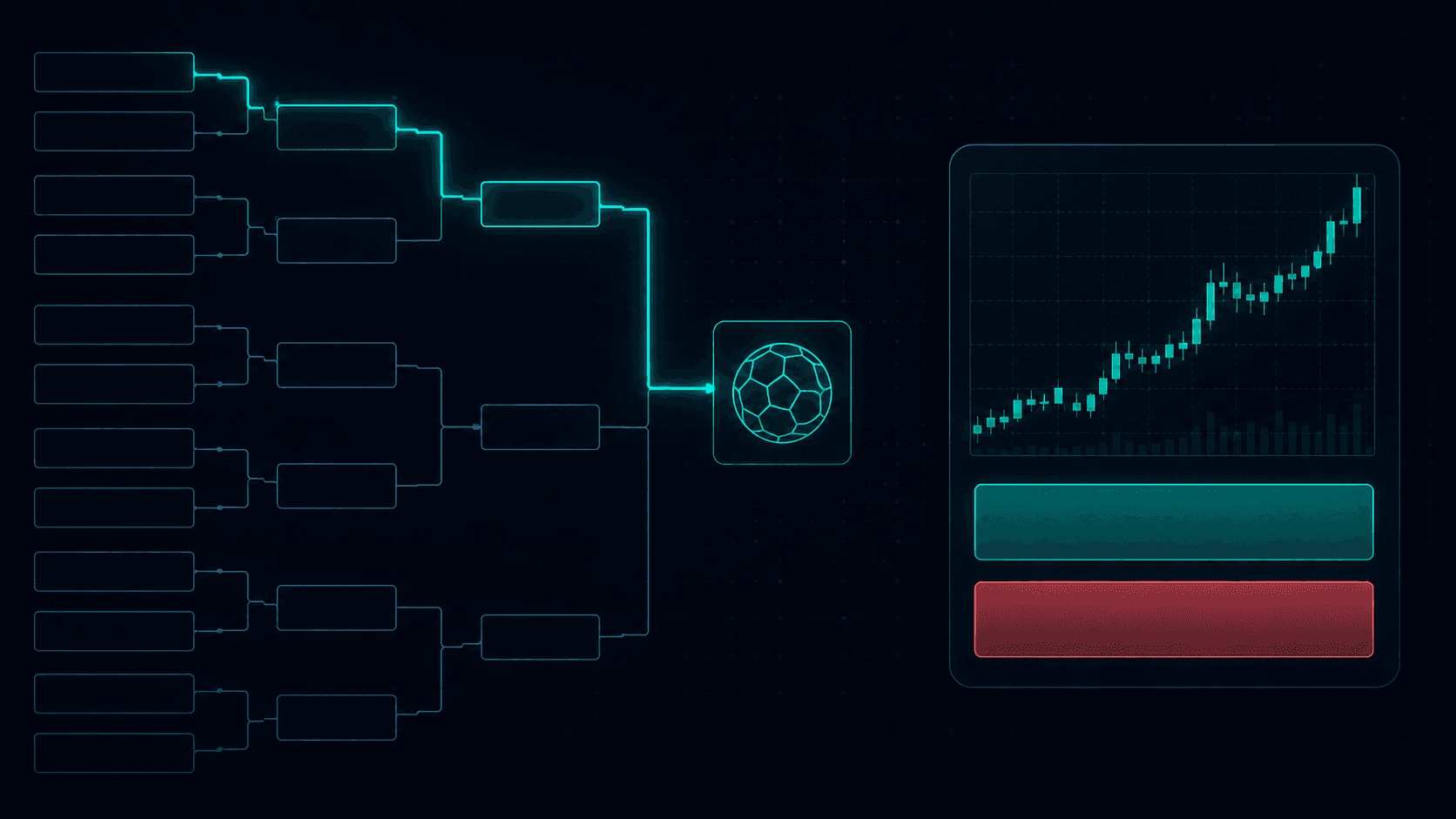
The 2026 FIFA World Cup, hosted across the United States, Canada, and Mexico, is the largest in history: 48 teams, 104 matches, and the deepest set of public prediction markets ever opened on a tournament. For Polymarket, this is the Super Bowl of liquidity events. For traders, it is one of the rare windows where you can find both narrative-driven mispricings and enough order-book depth to actually trade them.
This guide is for people who want to participate, not just spectate. We will walk through the kinds of World Cup markets you will see, how to actually buy and sell Yes/No shares, how to think about pricing during a tournament, and how to use Price Alerts so you do not have to watch every group game to catch the moves.
What You Will Learn
- The three main types of World Cup markets on Polymarket
- How to buy Yes/No shares on a knockout game or outright winner
- How prices move differently in group stage vs. knockout rounds
- How to use price alerts to trade the tournament without burning out
- The most common rookie mistakes during a major sports tournament
The Three Types of World Cup Markets You Will See
Polymarket usually breaks a major tournament into three layers of markets. Understanding which layer you are looking at is the first step to not getting confused by the price.
1. Outright winner.
"Will [Country] win the 2026 FIFA World Cup?" One market per contender. Prices reflect the probability that the team lifts the trophy. These are the most heavily traded and longest-running markets in the tournament. A favorite might trade around $0.18, a dark horse around $0.04, an outsider under $0.01.
2. Stage / round markets.
"Will [Country] reach the final?" "Will [Country] reach the semis?" "Will [Country] win Group X?" These markets resolve along the way and are great for traders who want to be right about the journey without betting on the trophy.
3. Per-match markets.
"Will [Country] win this match?" or "Will the match be a draw?" Created for individual games, especially big group stage clashes and every knockout fixture. These are the closest analog to traditional sports betting and they move fast.
You will also see exotics: top scorer markets, "will there be a goal in the first 15 minutes" markets in some cases, and bracket-shaped derivatives. The three above are the meat of the tournament.
How to Actually Buy a Yes or No Share
If this is your first time, the mechanics are simple. We will use a per-match market as an example.
Say Brazil plays Germany in the round of 16 and the market "Will Brazil win the match?" is trading at $0.55 / $0.57 (best bid / best ask).
To bet Brazil wins, you buy "Yes":
- A limit order at $0.55 = you wait, only fills if someone sells to you at that price.
- A market order = you pay the ask of $0.57 right now.
- Each Yes share pays $1.00 if Brazil wins, $0.00 if they do not.
- Profit per share if right: ($1.00 - your fill price). At $0.55 fill, that is $0.45.
To bet Brazil does NOT win (Germany wins OR the match goes another way per resolution rules), you buy "No":
- "No" is just the other side of "Yes." If "Yes" is $0.57, "No" is roughly $0.43.
- Each No share pays $1.00 if Brazil does not win, $0.00 if they do.
The price you pay is the implied probability. $0.55 on "Yes" means the market thinks there is roughly a 55% chance Brazil wins this match. If you think it is 65%, that is your edge. If you think it is 50%, you should probably not be in the trade.
If "price equals probability" is still fuzzy, read Understanding Polymarket Odds: How a 60¢ Share Actually Works once, then come back.
Group Stage vs. Knockout Stage: Prices Move Differently
A common mistake is treating every World Cup market the same. They are not.
Group stage markets behave more like a portfolio. A team's "outright winner" price barely moves on a single 1-0 group win against a minnow, because that result was already heavily expected. The same team losing to a minnow, however, can wreck their outright price and their "win the group" market in one afternoon.
Knockout stage markets are pure binary stress. A pre-match "Will [Country] reach the final?" at $0.40 can sit there all day and then halve or double within 90 minutes once the match is underway. This is where the in-play action is, and it is where bad trade sizing can hurt you fastest.
A useful mental model:
- Group stage: trade outrights and group winners. Slower, more thesis-driven.
- Knockout stage: trade per-match and "reach next round" markets. Faster, more event-driven.
Trading Live Without Watching Every Minute
You do not have to watch every match to participate. The trick is letting alerts do the watching.
Workflow for the tournament:
-
At the start of the tournament, identify 3 to 5 outright contenders you have an opinion on. Look at their prices on Markets Explorer. Decide which ones you think are mispriced.
-
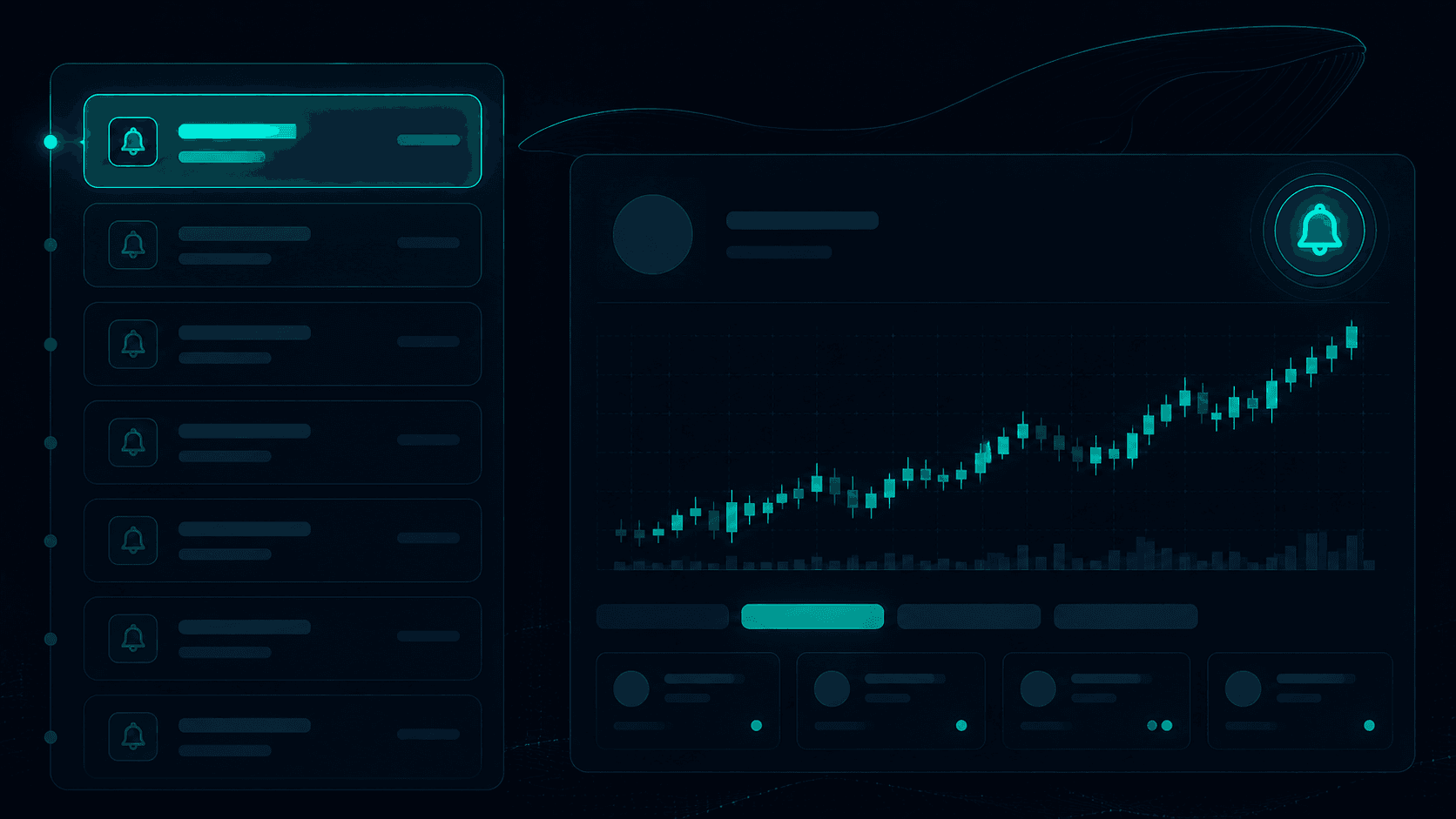
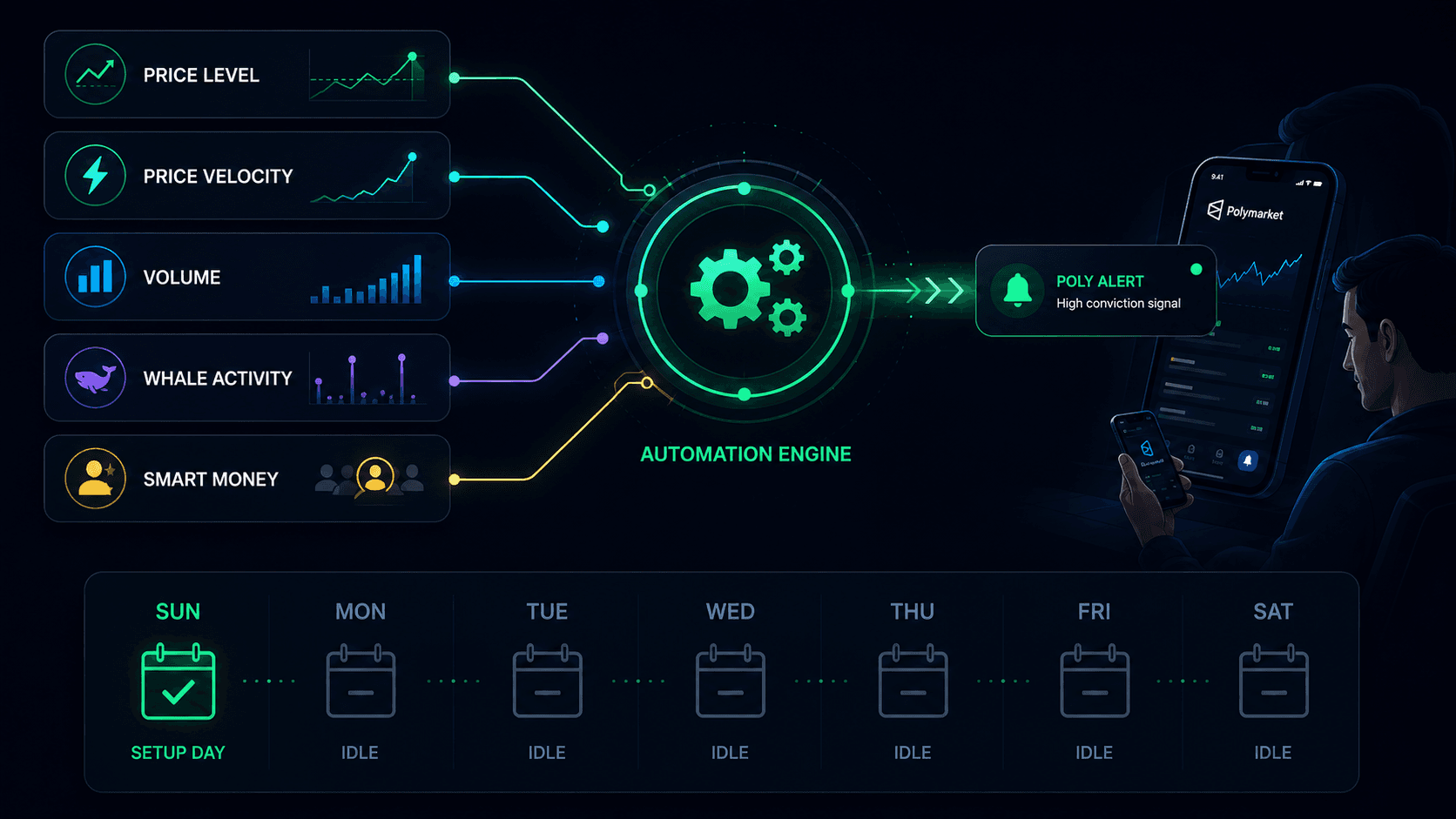
For each pick, set a Price Alert at the level you would actually buy or sell. "Notify me if Argentina drops below $0.15." "Notify me if England crosses $0.22."
-
Each match day, set per-match alerts on the games you have a view on. Decide before the match what price would make you act.
-
When an alert fires, look at the situation calmly. Use a limit order, not a panic market order. If the price moved on real news, fine. If it moved on a single weird tackle and you can hold conviction, that is often where the best entries live.
-
After each round, check Whale Trades and Whales Live Feed to see how the largest accounts are repositioning. You do not have to copy them, but their flow during a tournament is one of the cleanest sentiment signals you will ever have.
This is the closest you will get to "trading the World Cup like a pro" without quitting your day job.
Common Rookie Mistakes During the Tournament
Some patterns repeat every major tournament. Knowing them in advance is most of the fight.
1. Chasing the favorite after one win.
A pre-tournament favorite that wins their first match by 3-0 will spike on outright. New traders pile in at the worst price. Veterans were already in at the pre-tournament level.
2. Buying "No" on a heavy underdog "to win the tournament" for almost nothing.
A team trading at $0.005 to win the cup means "No" is around $0.995. You are tying up capital to make almost no return, while taking on the tail risk of one of those magical World Cup runs. Almost never worth it.
3. Trading every match.
The World Cup has 104 matches. You do not have an edge in 104 matches. Pick the games where your read meaningfully disagrees with the market, skip the rest.
4. Ignoring liquidity.
Late group stage matches between teams already eliminated often have shallow books. The market is not stupid, it is just bored. Be careful about size.
5. Never closing winners.
A pre-tournament "Will [Team] reach the semis?" at $0.20 that is now $0.65 in the round of 16 is already a great trade. You do not have to wait for resolution. Selling into strength is a feature, not a failure.
If those last two sound familiar, 5 Common Mistakes New Polymarket Traders Make goes deeper on the psychology behind them.
A Sample Tournament Plan
For someone who wants to participate without overcomplicating things, a complete tournament plan can be as simple as this:
- Pre-tournament: Buy small outright positions in two teams you genuinely believe are mispriced. Limit orders, sensible size.
- Group stage: Set price alerts on those teams' outright markets and any per-match upset opportunities. Trade only the spots where the price moves meaningfully out of line with the fundamentals.
- Round of 16: Re-evaluate. If your outrights are now far in profit, sell some. If they are out, accept and move on.
- Quarterfinals onward: Per-match markets dominate. This is where attention is, where liquidity is deepest, and where careful traders extract the most value.
- Final: If you have made money, consider just watching the game.
A tournament played this way is fun, manageable, and educational. A tournament played by tapping market orders on every screen turning red is none of those things.
Conclusion
The 2026 FIFA World Cup is the most liquid sports event Polymarket has ever hosted. That means real opportunity, and real risk for traders who treat it like a casino.
The right approach is the same as for any other Polymarket trading, just turned up in volume:
- Pick markets where you actually have a view.
- Use limit orders and respect liquidity.
- Set price alerts so you do not have to babysit every game.
- Take profits along the way instead of waiting for the trophy.
Do that, and a month of football turns into a month of structured, interesting decisions. Skip it, and a month of football turns into a month of regret.
Resources:
Frequently Asked Questions
Can I bet on the 2026 World Cup on Polymarket?
Yes. Polymarket typically lists outright winner markets, per-team stage markets ("reach the final," "win the group"), and per-match markets for major fixtures throughout the tournament. You buy Yes/No shares with pUSD on the Polymarket platform.
How do Polymarket odds work for the World Cup?
Each market trades between $0.00 and $1.00, where the price is the implied probability of the outcome. A team trading at $0.18 to win the cup means the market sees roughly an 18% chance. Each winning share pays $1.00 at resolution.
What is the safest way to start trading the World Cup as a beginner?
Start small. Pick one or two outright markets you have a real opinion on, buy them with limit orders, and use Price Alerts instead of staring at the screen. Avoid trading every match, you do not need to.
Should I trade per-match or outright winner markets?
Both have a place. Outright markets are slower and reward longer-term theses. Per-match markets are faster, more event-driven, and where most of the in-play action happens. Most successful retail traders use outrights for portfolio bets and per-match markets for tactical trades.
How do I take profit before the tournament ends?
You do not have to wait for the final. If your "Yes" shares have appreciated meaningfully, you can sell some or all of them into the market at the current price using a limit order. This is one of the biggest advantages of trading prediction markets over fixed sportsbook tickets.
Disclaimer: The content provided in this article and via the PolyAlertHub tools is for informational purposes only. It does not constitute financial, investment, or gambling advice. Regulatory availability of Polymarket varies by jurisdiction, always confirm access and local rules before trading. Prediction markets carry real risk, and you should never wager more than you can afford to lose. Past performance does not guarantee future results.